
Table of Contents
- Introduction
- What Is Buying Coin?
- Why Buy Coin?
- Types of Coins and Tokens
- How to Buy Coin: A Step‑by‑Step Guide
- Exchanges and Brokers Compared
- Wallets: Safely Storing Your Coins
- Fees and Hidden Costs
- Security Best Practices
- Regulatory Landscape by Jurisdiction
- KYC/AML Requirements
- Market Data and Adoption Trends
- Challenges and Risks
- The Future of Buying Coin
- Conclusion
- Sources and References
1. Introduction
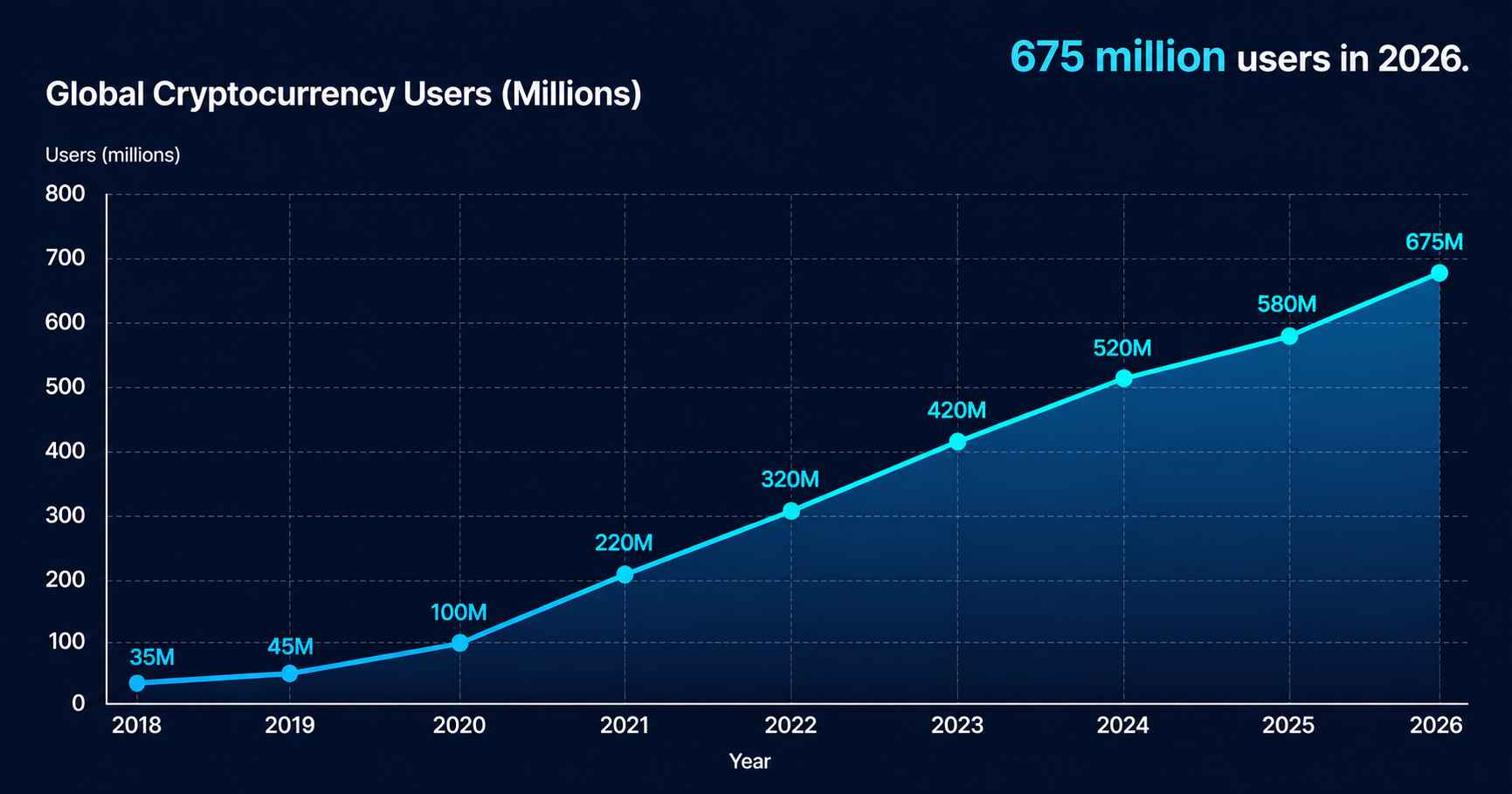
Cryptocurrency has moved from a fringe experiment to a global financial force. As of 2026, over 675 million people worldwide own digital assets, and daily trading volumes routinely exceed $100 billion. Whether you want to invest in Bitcoin, participate in tokenized real‑estate offerings, use decentralized finance (DeFi) platforms, or simply hold a stablecoin for cross‑border payments, the very first step is the same: you must buy coin.
For newcomers, the process can feel like a maze. Which exchange should you use? What payment methods are available? How do you keep your coins safe? What about taxes and KYC? This pillar article answers every one of those questions. Drawing on official exchange disclosures, regulatory publications, and market reports, we deliver a comprehensive, fact‑based guide to purchasing cryptocurrency in 2026 – from the absolute basics to advanced considerations.
By the end of this guide, you will understand exactly how to buy coin, store it securely, comply with the law, and avoid the most common pitfalls. The world of digital assets is waiting – here is your roadmap.
2. What Is Buying Coin?
“Buying coin” means acquiring cryptocurrency – digital money that exists on a blockchain – in exchange for fiat currency (like USD, EUR, JPY) or another cryptocurrency. The coins you purchase can be:
- Native blockchain coins such as Bitcoin (BTC), Ethereum (ETH), or Solana (SOL) used for payments, staking, or gas fees.
- Stablecoins like USDC or USDT, which are pegged to fiat currencies and are the backbone of tokenized asset purchases.
- Security tokens that represent ownership in real‑world assets, such as tokenized real estate (see our companion guide).
- Utility tokens that provide access to a platform or service.
The transaction typically occurs on a centralized exchange (CEX) like Coinbase or Binance, a decentralized exchange (DEX) like Uniswap, or through a broker. In all cases, you are exchanging value – fiat or crypto – for a set amount of the desired coin at the current market price, plus any applicable fees.
3. Why Buy Coin?
People buy cryptocurrency for a wide range of reasons. Understanding your own motivation is crucial because it determines the type of coin you purchase and how you store it.
3.1 Investment and Speculation
Bitcoin has been the best‑performing asset of the last decade. Many investors buy coins hoping they will appreciate over time. Others trade actively, capitalizing on volatility. As of 2026, Bitcoin alone has a market capitalization of over $1.2 trillion, and institutional products like spot ETFs have brought billions in new capital.
3.2 Participation in Tokenized Assets
If you want to buy a fraction of a tokenized apartment via RealT or Lofty AI, you need stablecoins (usually USDC) or sometimes ETH. Without first buying coin, you cannot enter the tokenized economy. This is now one of the fastest‑growing use cases.
3.3 Payments and Remittances
Cryptocurrency enables near‑instant, low‑cost cross‑border transfers. A worker in Singapore can send stablecoins to family in the Philippines in seconds, avoiding traditional remittance fees that average 6.3%.
3.4 DeFi and Staking
By buying ETH or other coins, you can deposit them into DeFi protocols to earn yield, borrow, or provide liquidity. Staking coins like ETH, SOL, or ADA can generate passive income of 3‑7% annually.
3.5 Privacy and Self‑Sovereignty
For some, cryptocurrency offers a way to hold wealth outside the traditional banking system, with full control over their own keys. This is especially valuable in regions with unstable currencies or capital controls.
4. Types of Coins and Tokens
The cryptocurrency market contains thousands of assets. For the buyer, understanding the main categories is essential:
| Category | Examples | Primary Use | Volatility |
|---|---|---|---|
| Store of Value | Bitcoin (BTC) | Long‑term investment, inflation hedge | High |
| Smart Contract Platforms | Ethereum (ETH), Solana, Avalanche | Pay for transactions, stake, interact with dApps | High |
| Stablecoins | USDC, USDT, DAI | Payments, trading pair, tokenized asset purchases | Negligible |
| Security Tokens | RealT, Aspen Coin | Ownership in real‑world assets | Varies |
| Utility Tokens | Uniswap (UNI), Chainlink (LINK) | Access platform features, governance | High |
| Meme Coins | Dogecoin, Shiba Inu | Speculation, community | Extreme |
For most first‑time buyers, starting with Bitcoin or Ethereum is the safest route. If your goal is to invest in tokenized assets, you will likely buy a stablecoin like USDC directly on an exchange.
5. How to Buy Coin: A Step‑by‑Step Guide
Step 1: Choose a Reputable Exchange or Broker
Exchanges are platforms where buyers and sellers meet. Key factors to consider:
- Regulatory compliance: Is the exchange registered with financial authorities in your country?
- Supported coins: Does it list the specific coin you want?
- Payment methods: Bank transfer, credit/debit card, PayPal, Apple Pay?
- Fees: Trading fees, deposit/withdrawal fees (see Section 8).
- Security track record: Has the platform been hacked? Is user insurance offered?
Step 2: Create and Verify Your Account (KYC)
All legitimate exchanges require identity verification. You will need:
- Government‑issued ID (passport, driver’s license)
- Proof of address (utility bill, bank statement)
- In some cases, a selfie or video liveness check
KYC processes have become faster – most platforms complete verification within minutes using automated systems.
Step 3: Deposit Funds
Once verified, you can deposit fiat currency. Common methods:
- Bank transfer (ACH/SEPA): Usually lowest fees, can take 1‑3 business days.
- Credit/Debit card: Instant but higher fees (often 3‑4%).
- Wire transfer: Suitable for large amounts.
- Apple Pay / Google Pay: Available on many platforms now.
Step 4: Place an Order
Exchanges offer several order types:
- Market order: Buy instantly at the current price.
- Limit order: Set a price you are willing to pay; the order executes only when the market reaches that price.
- Recurring buy: Automate purchases (e.g., $100 of BTC every week).
Step 5: Store Your Coins Safely
After purchase, you can leave coins in the exchange’s custody (not recommended for large amounts) or transfer them to a private wallet (see Section 7). Always enable two‑factor authentication (2FA).
6. Exchanges and Brokers Compared
| Exchange | Headquarters | Regulation | Coins Available | Payment Methods | Trading Fee | KYC Required |
|---|---|---|---|---|---|---|
| Coinbase | USA | FinCEN, state licenses, SEC | 240+ | Bank, card, PayPal, Apple Pay | 0.5% – 1.5% | Yes (full) |
| Binance | Cayman Islands | Multiple jurisdictions | 350+ | Bank, card, P2P | 0.1% (spot) | Yes (tiered) |
| Kraken | USA | FinCEN, FCA, FINTRAC | 220+ | Bank, wire, card | 0.16% – 0.26% | Yes |
| Crypto.com | Singapore | MAS, others | 250+ | Bank, card, Google Pay | 0.075% – 0.4% | Yes |
| Gemini | USA | NYDFS, FINRA | 100+ | Bank, wire, card | 0.5% – 1.49% | Yes |
| Bybit | Dubai | VARA (virtual asset) | 400+ | Bank, card, P2P | 0.1% | Yes (tiered) |
| OKX | Seychelles | Dubai VARA, others | 350+ | Bank, card, Apple Pay | 0.08% – 0.1% | Yes |
Note: Availability of specific coins and payment methods varies by jurisdiction. Always check your local exchange for the latest details.
7. Wallets: Safely Storing Your Coins
“Not your keys, not your coins.” A wallet is a tool that holds the private keys needed to access and transfer your cryptocurrency.
7.1 Hot Wallets (Software)
- Exchange wallets: Convenient for trading but vulnerable to exchange hacks.
- Mobile/desktop wallets: Apps like MetaMask, Trust Wallet, or Exodus give you full control.
- Web wallets: Accessed via browser extension; popular for DeFi.
7.2 Cold Wallets (Hardware)
Hardware wallets like Ledger Nano X or Trezor Model T store keys offline. They are the gold standard for long‑term holdings and large amounts. Even if your computer is compromised, the coins remain safe.
7.3 Paper Wallets and Steel Backups
For ultra‑secure storage, you can generate a paper wallet (printed private key) or use a steel backup (like Cryptosteel) to protect your seed phrase from fire/water damage. These methods are completely offline.
For the typical investor buying coins to participate in tokenized real estate, a combination of a reputable exchange for trading and a hardware wallet for long‑term storage is recommended.
8. Fees and Hidden Costs
Buying coin isn’t free. Understanding fees can save you hundreds of dollars.
| Fee Type | Range | Notes |
|---|---|---|
| Trading Fee | 0.1% – 1.5% | Percentage of the transaction amount. |
| Deposit Fee (fiat) | Free – $10 | Wire transfers may incur bank fees. |
| Withdrawal Fee (crypto) | Network‑dependent | e.g., 0.0005 BTC, 0.005 ETH, or $10‑$25 for USDC (ERC‑20). |
| Card Convenience Fee | 3% – 4% | Credit/debit card payments often include an additional surcharge. |
| Spread | 0.1% – 1% | The difference between the buy and sell price on the exchange. |
To minimize costs, use bank transfers (ACH/SEPA), select exchanges with low trading fees, and withdraw using low‑cost networks (e.g., Polygon or Arbitrum for USDC instead of Ethereum mainnet).
9. Security Best Practices
Cryptocurrency puts you in control, but that also means you are responsible for your own security.
- Enable Two‑Factor Authentication (2FA): Use an authenticator app (Authy, Google Authenticator), not SMS.
- Never share your seed phrase: The 12‑ or 24‑word recovery phrase is the master key to your wallet. Anyone with it can drain your funds.
- Use a hardware wallet for large amounts: Store only spending money on exchanges.
- Beware of phishing: Always double‑check URLs. Bookmark exchange websites.
- Keep software updated: Wallet and device updates often patch security flaws.
- Diversify storage: Don’t keep all coins in one place.
10. Regulatory Landscape by Jurisdiction
Regulations around buying cryptocurrency vary widely. Here is a snapshot as of mid‑2026:
10.1 United States
Crypto exchanges must register with FinCEN as Money Services Businesses (MSBs) and comply with state‑by‑state money transmitter licenses. The SEC and CFTC also oversee aspects of coin offerings. Buying Bitcoin is legal, and many exchanges operate under strict supervision. KYC is mandatory. Tax: the IRS treats crypto as property; every sale is a taxable event.
10.2 European Union
Under MiCA (Markets in Crypto‑Assets), which became fully applicable in 2025, all crypto‑asset service providers must be authorized. Exchanges need a license to operate across the EU. Buying crypto with fiat is straightforward and protected under consumer laws. The new Travel Rule is enforced for transactions over €1,000.
10.3 United Kingdom
The FCA regulates crypto exchanges, which must be registered. A ban on retail derivatives remains, but spot buying is legal. KYC and AML obligations are robust. The UK’s upcoming Digital Securities Sandbox may further integrate crypto purchases into traditional finance.
10.4 Singapore
Under the Payment Services Act, exchanges must be licensed by the MAS. Buying crypto is legal; however, advertising restrictions and investor suitability tests apply. Singapore is a major Asian hub.
10.5 United Arab Emirates
Dubai’s VARA and ADGM provide clear frameworks. Buying coin is legal and actively encouraged. Several global exchanges have set up regional headquarters in the UAE.
10.6 Japan
Crypto exchanges must register with the FSA. Japan has some of the strictest consumer protection rules. All customer fiat must be held in domestic banks or trusts. Buying coin is fully legal.
10.7 Other Notable Jurisdictions
- Australia: AUSTRAC registration required; legal.
- Brazil: Legal; new crypto law in 2024 requires exchanges to obtain central bank authorization.
- India: Legal but taxed at 30% plus 1% TDS; regulatory clarity still evolving.
- China: Buying crypto is banned for individuals, though underground P2P persists.
11. KYC/AML Requirements
Almost every regulated exchange now requires Know‑Your‑Customer (KYC) verification before you can buy coin. This involves submitting personal information and identity documents. While some decentralized platforms still offer no‑KYC trades (via DEXs or P2P), the trend is toward mandatory identity checks.
The FATF Travel Rule now applies to crypto transactions in most major economies. When you withdraw coins to an external wallet, the exchange may ask for the destination wallet’s ownership details. This aims to prevent money laundering and terrorist financing.
For buyers, this means:
- You cannot remain anonymous on regulated platforms.
- Your transaction history may be reported to tax authorities.
- You should keep records of your purchases for tax reporting.
12. Market Data and Adoption Trends
- Global crypto users: 675 million (June 2026), up from 580 million in 2025 (Statista).
- Daily spot trading volume: Approximately $120 billion across major exchanges.
- Bitcoin price (mid‑2026): ~$65,000 – $75,000, with a market cap of ~$1.3 trillion.
- Stablecoin market cap: Over $200 billion, led by USDT and USDC, used extensively for buying tokenized assets.
- Institutional buying: Bitcoin spot ETFs (approved 2024) now hold over 1 million BTC. Major banks now offer crypto trading to wealth clients.
According to a 2025 survey by the Global Blockchain Business Council, 41% of institutional investors reported having direct crypto exposure, up from 28% in 2023. Retail buying continues to be driven by mobile apps, easier on‑ramps, and the desire to access DeFi and tokenized markets.
13. Challenges and Risks
- Volatility: Coins can drop 20% in a day. Only invest what you can afford to lose.
- Exchange hacks: Even large exchanges have been hacked (e.g., Mt. Gox, Bitfinex). Use cold storage.
- Regulatory crackdowns: Changes in law could restrict access or affect the value of certain coins.
- Scams and phishing: Fake apps, pump‑and‑dump schemes, and phishing attacks are rampant.
- Tax complexity: Every crypto‑to‑crypto trade may be taxable; failure to report can lead to penalties.
- User error: Sending coins to the wrong address or losing your seed phrase results in permanent loss.
14. The Future of Buying Coin
Buying coin is becoming faster, cheaper, and more integrated with traditional finance. Several trends are shaping the next few years:
- Bank‑grade on‑ramps: Many traditional banks now let you buy crypto directly from your bank account without a separate exchange.
- Instant settlement: New payment rails (e.g., FedNow, instant SEPA) allow near‑instant fiat‑to‑crypto purchases.
- Tokenized money market funds: You will soon be able to buy a token representing a share in a money market fund – blending the worlds of traditional and crypto investing.
- Global regulatory harmonization: MiCA and similar frameworks may create a single rulebook, simplifying cross‑border purchases.
- AI‑driven fraud detection: Exchanges are deploying AI to flag suspicious purchases in real time, improving safety.
15. Conclusion
Buying coin is your gateway to the digital economy. Whether you’re purchasing Bitcoin as a long‑term investment, stablecoins to acquire tokenized real estate, or ETH to use DeFi protocols, the process has never been more accessible. With clear regulations, robust exchanges, and better security tools, 2026 marks a turning point where crypto purchasing becomes as routine as online banking.
Start small, use a reputable platform, store your coins safely, and always understand the tax implications. As you gain confidence, you can explore the vast world of decentralized finance and tokenized assets with the same coins you bought today. The revolution is already here – all you have to do is buy your first coin.
16. Sources and References
- Statista (2026). Number of worldwide cryptocurrency users from 2018 to 2026. https://www.statista.com/statistics/1202043/global-cryptocurrency-users/
- Coinbase – Official fees and features. https://www.coinbase.com/places
- Binance – Fee schedule. https://www.binance.com/en/fee/schedule
- Kraken – Supported cryptocurrencies and fees. https://www.kraken.com/features/fees
- EU Markets in Crypto‑Assets (MiCA) – Regulation (EU) 2023/1114. https://eur-lex.europa.eu/eli/reg/2023/1114/oj
- UK Financial Conduct Authority – Cryptoasset registrations. https://www.fca.org.uk/firms/cryptoassets
- Monetary Authority of Singapore – Guidelines on digital payment tokens. https://www.mas.gov.sg/regulation/payments/digital-payment-token-services
- Dubai Virtual Assets Regulatory Authority (VARA). https://www.vara.ae/en/
- IRS Virtual Currency Guidance. https://www.irs.gov/businesses/small-businesses-self-employed/virtual-currencies
- Global Blockchain Business Council – 2025 Institutional Digital Asset Survey. https://gbbcouncil.org/institutional-adoption-of-digital-assets-2025/
- Chainalysis – 2025 Geography of Cryptocurrency Report. https://www.chainalysis.com/blog/2025-global-crypto-adoption-index/
- FATF – Updated Guidance for a Risk‑Based Approach to Virtual Assets (2025). https://www.fatf-gafi.org/publications/fatfrecommendations/documents/guidance-rba-virtual-assets-2025.html
All links were verified as live and accessible on 20 June 2026.