Real estate tokenization is the process of representing ownership of property — or the income and value it produces — as digital tokens on a blockchain. Instead of buying a whole building or a share in a fund through layers of intermediaries, investors can hold compliant tokens that stand for a fraction of the asset, and those tokens can be transferred and settled in minutes.
Property is the largest asset class on earth, worth hundreds of trillions of dollars, yet it is also one of the most illiquid and hardest to access. That gap is exactly why real estate tokenization is considered the biggest untapped opportunity in the wider world of real world assets. This guide explains what it is, how it works, what you actually own, and why Switzerland has become its natural home.
Key takeaways
- Real estate tokenization turns property ownership or income into compliant, tradable blockchain tokens.
- It unlocks fractional ownership, faster settlement, broader access and transparent records.
- Real estate is the largest asset class but among the least tokenized so far — a large opportunity.
- What you own depends on the structure: direct legal title in some models, economic exposure in others.
- Switzerland’s DLT Act gives tokenized property one of the clearest legal foundations in the world.
What is real estate tokenization?
Real estate tokenization issues blockchain tokens that represent a legal claim on a property or a property-holding vehicle. Each token is backed by a real asset held in a defined legal structure, and the rules for who can own or trade it are enforced automatically. In effect, a building becomes a programmable security that can be divided into affordable units and moved on a shared ledger.
The token is a representation, not the bricks themselves. The property still exists, is still managed, and is still governed by local property law — but the ownership record and the market for it move on-chain, where they are faster, more transparent and easier to access.
Why real estate is the biggest RWA opportunity
The scale of the prize is what sets property apart. Global real estate dwarfs every other asset class, yet only a tiny fraction has been tokenized. While tokenized US Treasuries and private credit led the early market — on-chain real world assets passed $31 billion (excluding stablecoins) by mid-2026, according to rwa.xyz — real estate has been the slowest large category to scale. The best-known retail platforms still measure their on-chain property in the tens of millions, a rounding error against the physical market.
That lag is the opportunity. It exists because property is genuinely hard to tokenize well: it carries legal complexity, valuation challenges and jurisdictional rules that a token cannot simply erase. The platforms that solve those problems — with real compliance, real custody and the right legal structure — stand to open an enormous market. Analysts widely expect real estate to become one of the largest tokenized asset classes over the coming decade.
How real estate tokenization works
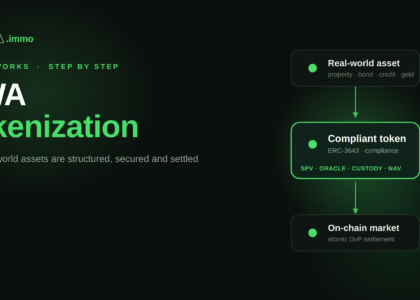
At a high level, real estate tokenization follows the same path as any real-world asset: the property is placed into a legal vehicle, a compliant token is issued to represent ownership or economic rights, investor identities and eligibility are verified, a custodian safeguards the asset and keys, and oracles feed valuation and net asset value on-chain. Investors then subscribe in a primary offering and can trade on a secondary market with atomic settlement.
The full mechanics — legal structures, token standards, compliance and custody — are covered in our guide to RWA tokenization. The important point for property specifically is that the legal structure does the heavy lifting: it defines exactly what a token holder owns.
The benefits of real estate tokenization
Done properly, real estate tokenization delivers advantages that traditional property investing struggles to match:
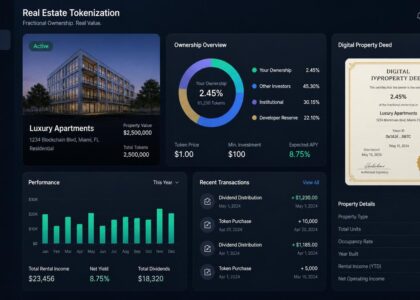
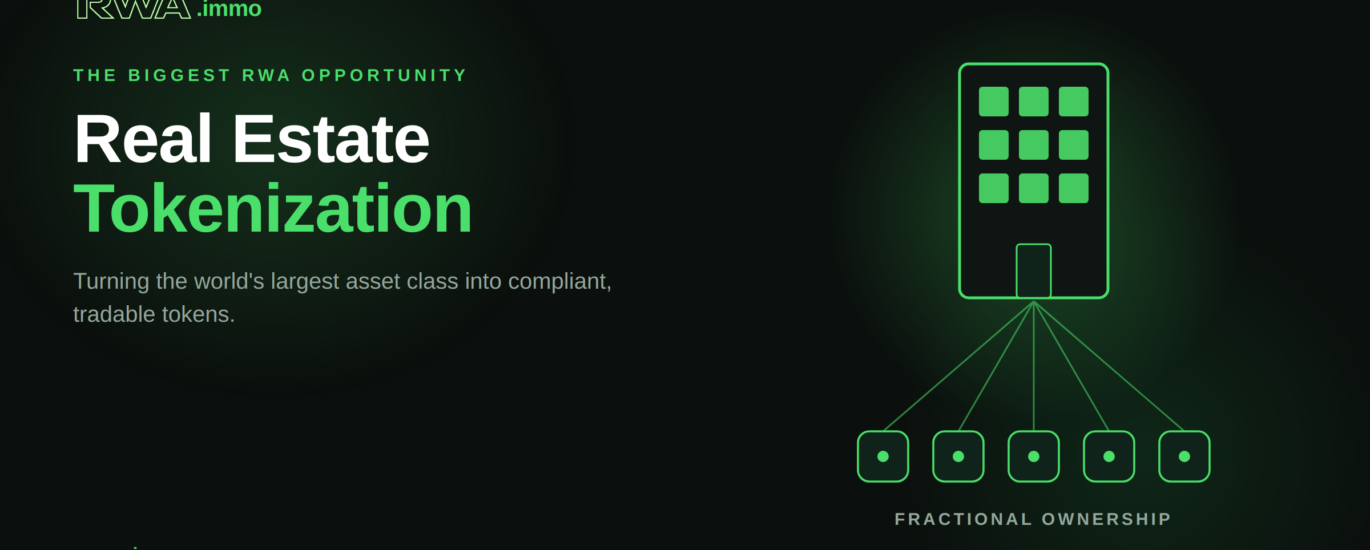
- Fractional ownership. A single building can be divided into many affordable units, so investors can gain exposure with far less capital than buying property outright.
- Liquidity potential. Tokens can be traded on a secondary market, offering a path to exit that traditional direct property ownership rarely provides.
- Broader access. Compliant global distribution lets qualified investors reach opportunities that were once local and closed.
- Faster, cheaper settlement. Atomic delivery-versus-payment settles trades in minutes without the usual chain of intermediaries.
- Transparency. Ownership, valuation and income distributions are recorded on an auditable ledger, reducing disputes and reconciliation.
For property owners and developers, the same technology opens a new, efficient route to raise capital and reach investors.
What can be tokenized?
Real estate tokenization applies across the property spectrum:
- Residential and commercial buildings — fractional ownership of income-producing assets.
- Rental income streams — tokens that distribute the cash flow a property generates.
- Development and forward-funding — raising capital against a project, with funds released as milestones are met.
- Property funds and portfolios — tokenized vehicles that hold multiple assets, offering diversification.
Each use case needs the right legal wrapper, but the underlying model — a compliant token backed by real property — stays the same.
The honest reality: what you actually own
Serious platforms are candid about a crucial detail: real estate tokenization does not make property law disappear. In most jurisdictions, a genuine change of legal title to land still requires the traditional land-registry process, which a token alone cannot replace. As a result, many structures give token holders economic exposure — a right to income and value through a property-holding vehicle — rather than direct on-chain legal title.
That is not a flaw; it is how compliant tokenization works today, and it can deliver the economic benefits investors want. But it means one rule matters above all: understand exactly what your token represents before you invest. A trustworthy platform will make the legal structure, the rights attached and the risks completely clear.
Regulation and why Switzerland leads
Regulation is what separates credible real estate tokenization from wishful thinking, and here Switzerland stands out. Its DLT Act created a clear category of “ledger-based securities,” giving tokenized assets a firm legal basis and even addressing how they are treated in insolvency — the kind of certainty institutions require. The relevant provisions sit within the Swiss Code of Obligations.
Europe adds further routes through frameworks such as the EU’s DLT Pilot Regime and MiCA, while other hubs including the UAE and Singapore are building their own regimes. This is precisely why rwa.immo takes a Switzerland-first approach: it builds on the clearest available legal foundation before expanding to other markets.
Real estate tokenization versus traditional property investing
How does a tokenized property compare with a REIT or a direct purchase? The short answer is that tokenization aims to combine the fractional access of a fund with greater transparency and a faster route to liquidity — while traditional vehicles still win on track record, scale and established secondary markets. We put the two side by side in RWA vs REITs, covering liquidity, fees, access and ownership.
How to get started with real estate tokenization
For investors, getting started means deciding what exposure you want, choosing a regulated platform, and checking the essentials — the legal structure, proof of reserves, custody, audits and compliance — before committing. Our practical walkthrough covers each step in how to invest in RWA.
Frequently asked questions
What is real estate tokenization in simple terms? It is turning ownership of a property, or the income it produces, into digital tokens on a blockchain, so the asset can be divided into affordable units and traded more easily than traditional property.
Is real estate tokenization legal? Yes, when structured as a compliant security. Switzerland’s DLT Act and the EU’s frameworks give tokenized property a clear legal basis, though each property remains subject to the local property law where it sits.
Do I own the actual property when I buy a token? It depends on the structure. Some models grant direct legal ownership, while many grant economic rights to income and value through a property-holding vehicle. Always confirm what the token legally represents.
Is tokenized real estate liquid? It can be more liquid than direct property ownership because tokens can trade on a secondary market — but liquidity is not guaranteed and depends on the platform, the asset and market demand.
The bottom line
Real estate tokenization brings the world’s largest and most illiquid asset class onto transparent, programmable rails — offering fractional ownership, broader access and a genuine path to liquidity. The opportunity is enormous precisely because property has been so hard to tokenize well, and success depends on real compliance, sound legal structuring and institutional-grade custody.
That is exactly what rwa.immo is building: institution-grade real estate tokenization on the clearest legal foundations available, starting in Switzerland. See how RWA tokenization works → or learn how to invest in RWA →.
This article is for general information only and is not investment, legal or tax advice. Market figures are sourced from rwa.xyz as of mid-2026 and will change over time.